hound is a student-built search-and-rescue prototype. run a simulated search, plan a route around damage, and test our network on sample wi-fi signals.
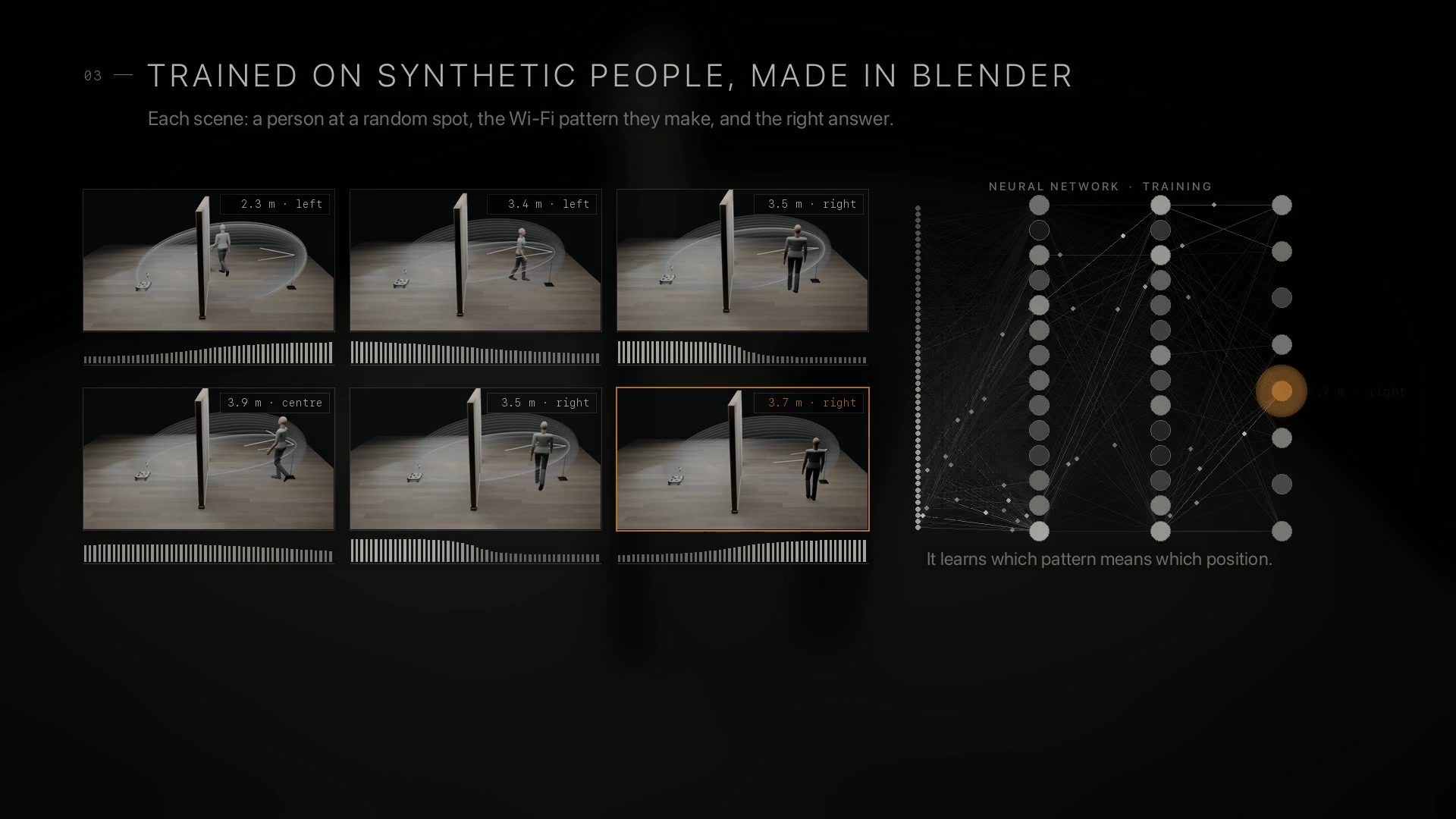
We had no real recordings, so a Blender script built 900 people at random spots behind a wall, standing or lying down, with breathing torsos. A simulator turned them into Wi-Fi signals, with room echoes, fans, and the ESP32's own noise and dropped packets.
The network is a 1-D CNN we wrote from scratch in NumPy, with hand-written gradients checked against finite differences. It has 23,372 weights and runs in about 1.1 ms on a laptop. It's small enough for a Raspberry Pi with no internet.
| Simulated test, 955 held-out windows | Result |
|---|---|
| Moving person found | 86.9% |
| Still told apart from moving | 91.5% |
| Empty room with a fan called a person | 7.9% |
| Still person found25.5% standing, 12.4% lying down | 21.4% |
These numbers come from simulation only. We have no real recordings yet, so they say nothing about real-world accuracy. Recording real data is our next step.
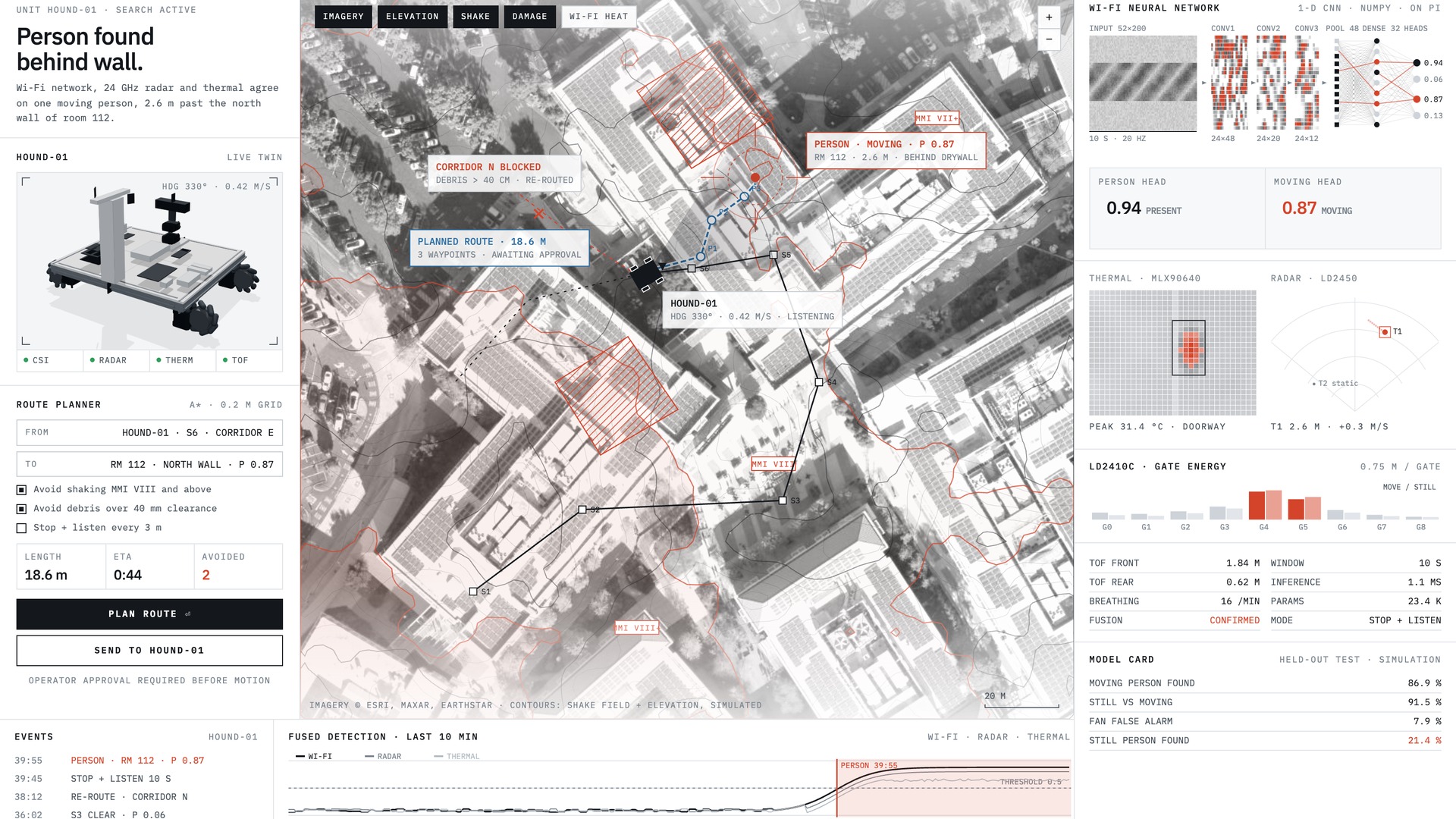
We built this at EvoHacks 2. It puts the map, the route and every sensor on one screen, and the operator stays in charge. It runs on simulated readings and is not yet connected to the real rover.

A satellite map of the search area with HOUND on it.
A simulated shake field and damage zones show where it's likely worst.
Press Plan Route and see the path around the damage on the map.
The rover never moves until the operator approves the route.
The browser can pair with compatible hardware over Bluetooth. The current rover firmware is pending support.
The same Wi-Fi network from HOUND runs in your browser.
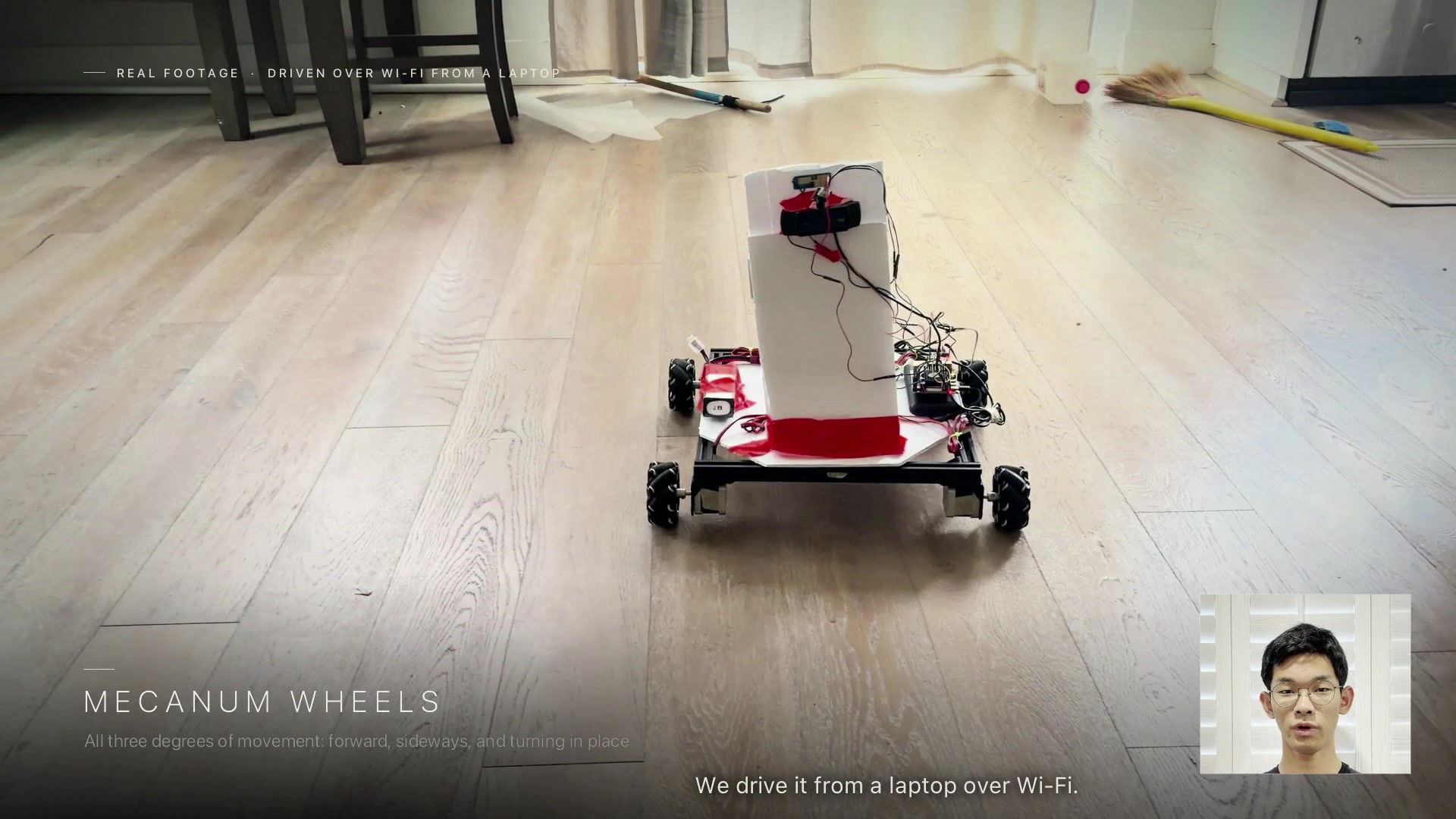
A rescuer drives HOUND from a laptop over Wi-Fi. Mecanum wheels let it slide sideways through doorways and around debris.
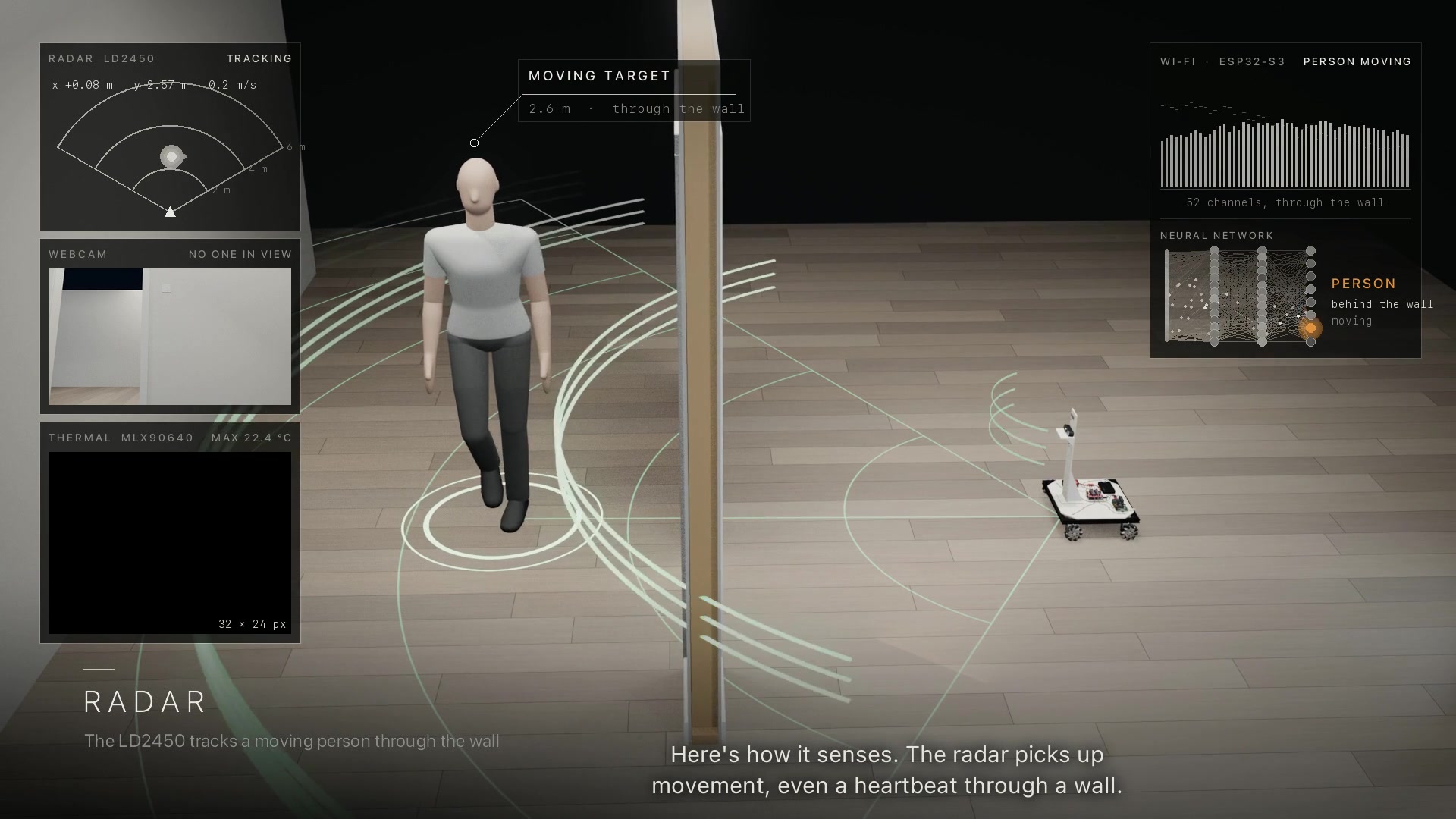
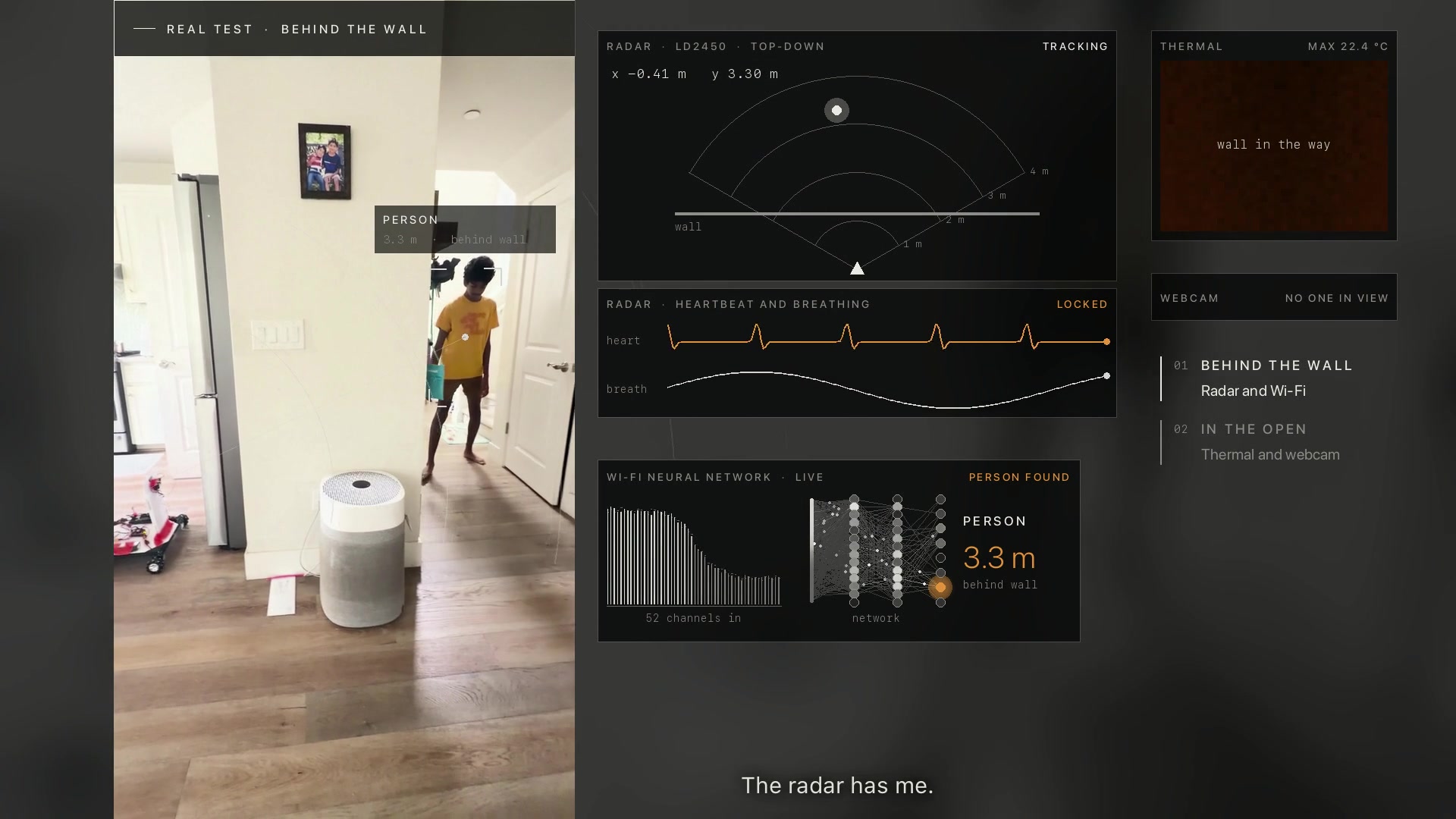
One ESP32-S3 sends Wi-Fi packets. A second one on HOUND measures how each arrives across 52 subcarriers. A body, and even breathing, changes the signal.
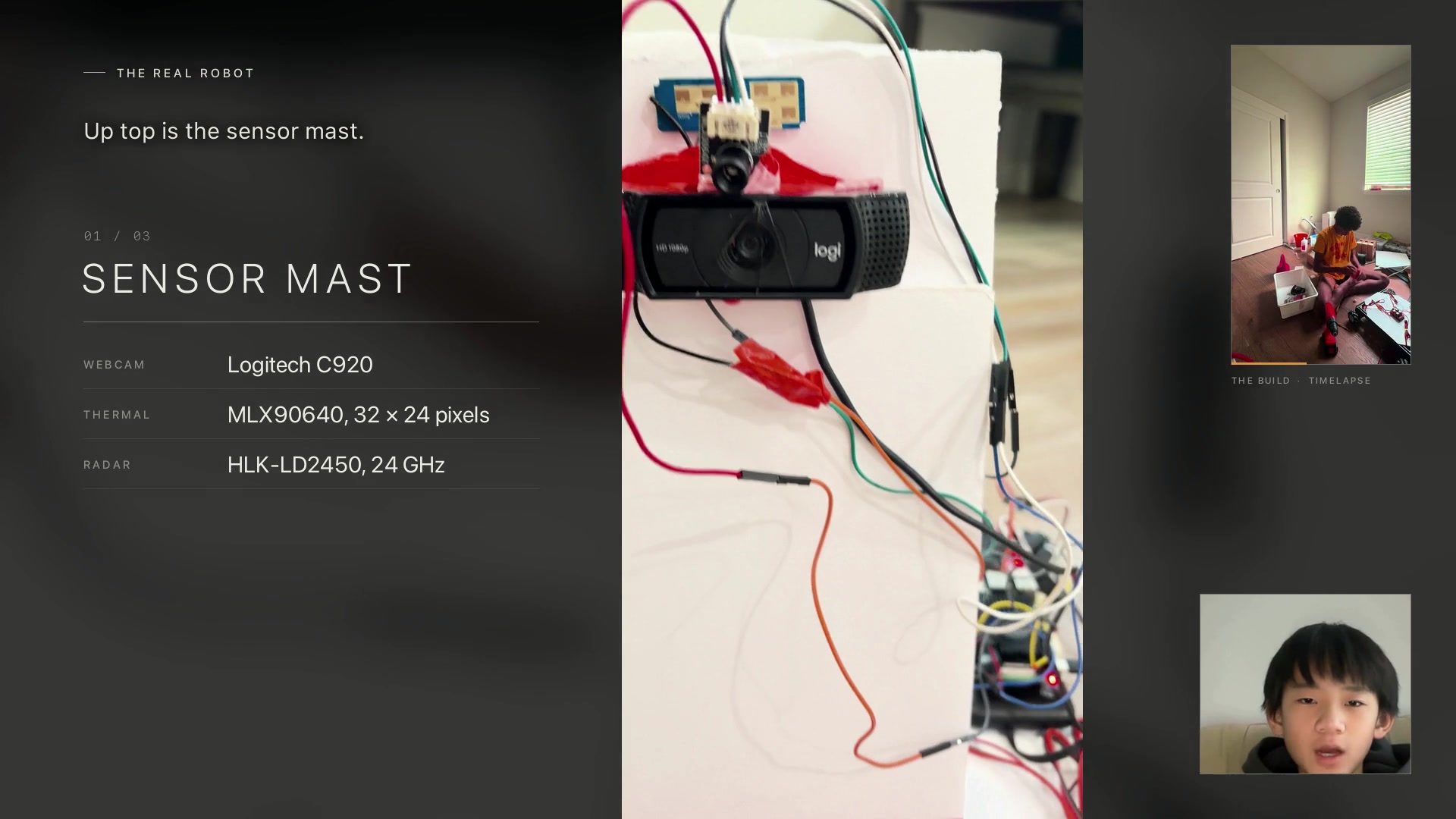
24 GHz radar finds where a moving person is. A thermal camera sees body heat in view. A webcam and distance sensors show the way.
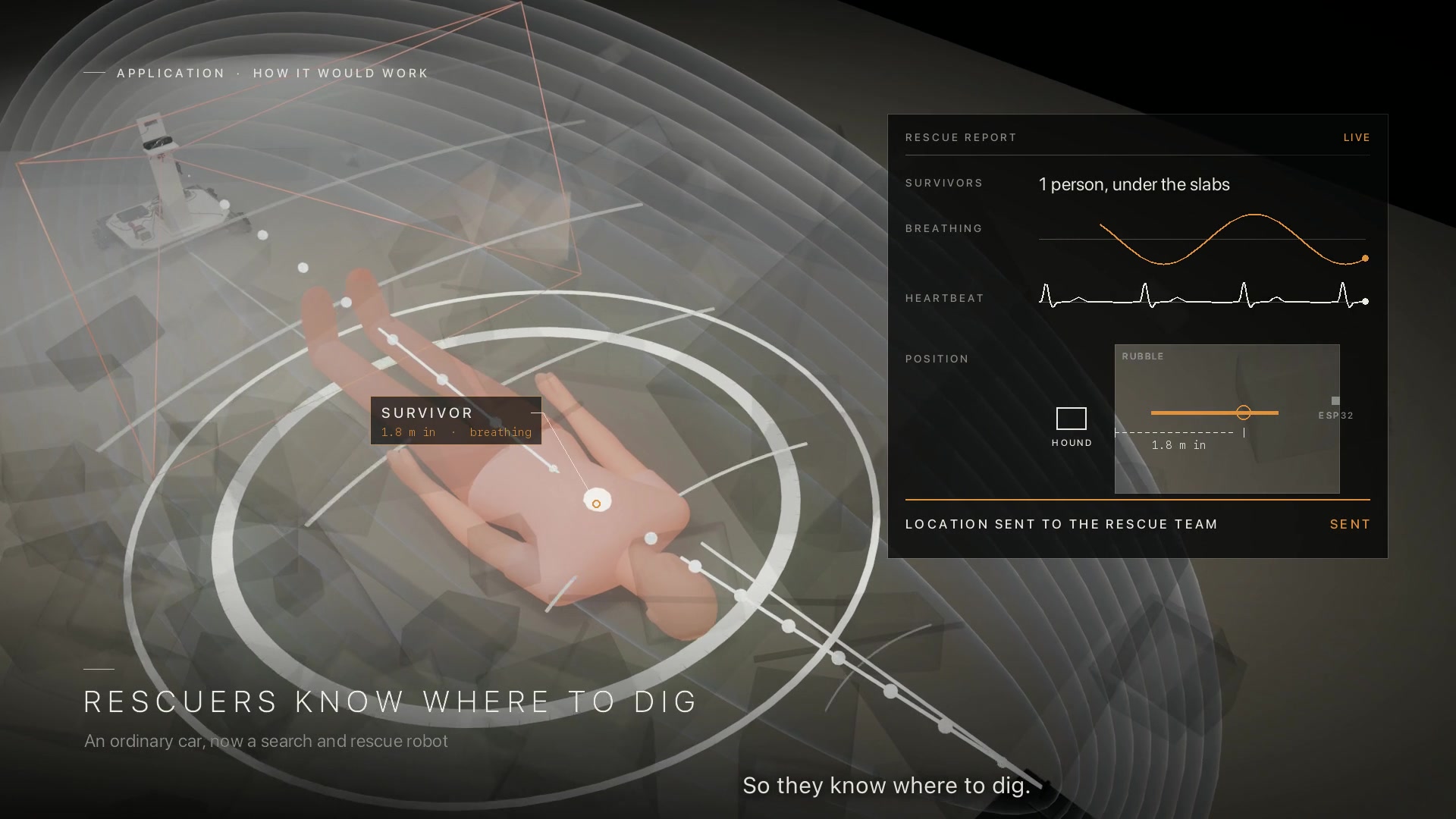
The readings are combined and shown to the operator, who decides what to do next. HOUND reports "person visible", never "alive".


On 26 August 2026, the Bhote Koshi flood hit the Nepal–Tibet border. Many of the missing were under mud, rock and collapsed buildings.
After a collapse, the tools are cameras on poles, search dogs and listening devices. A camera can't see through a wall. A dog needs a handler and gets tired. A listening device needs the survivor to make noise. Through-wall radar exists, but it costs thousands of dollars, so most volunteer and under-funded teams don't have one.
We wanted to see how much of that job a student-built rover made from cheap parts could do.
Source: UN Nepal situation report, citing Nepal’s disaster authority on 15 September 2026 at 19:00. It recorded 1,399 deaths and 5,179 people missing.
Everything on HOUND is a part a hobbyist can buy. The Arduino stops the motors on its own 400 ms after the Pi goes quiet, so a dropped link can't leave the rover driving.


We're three students. We built HOUND for disaster search and rescue, and the console at EvoHacks 2 for the Social Good theme.
Rishith Chennupati
Junsu Park